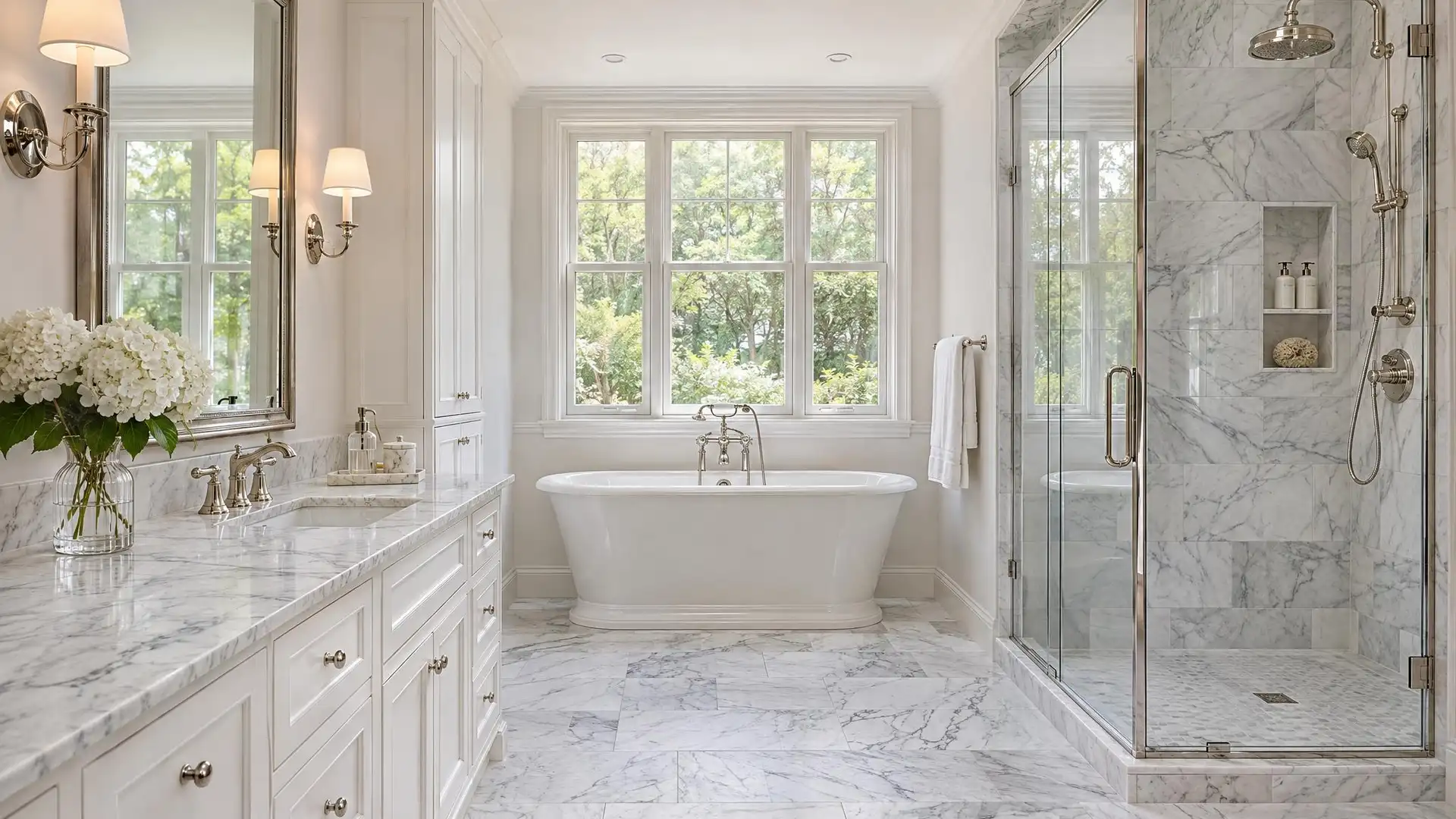
Natural stone has depth that printed tile cannot quite copy. Marble, travertine, limestone and slate have been used in Washington-area homes for generations, and they suit both traditional and modern rooms.
Stone is also softer, more porous and more brittle than porcelain. It needs a stiffer floor, the right setting materials and sealing to perform well.
What Stone Needs That Porcelain Does Not
Skipping any of these is how stone installations go wrong.
- A floor roughly twice as stiff as one for ceramic tile, to prevent cracking
- White mortar under light marble so gray does not shadow through
- Moisture-sensitive stones, such as some green and black marbles, set with the correct adhesive
- Dry-laying and blending tiles so veining and color are balanced across the room
- Sealing before grouting so grout does not stain the surface
- Unsanded or fine grout on polished finishes to avoid scratching
Choosing a Stone and a Finish
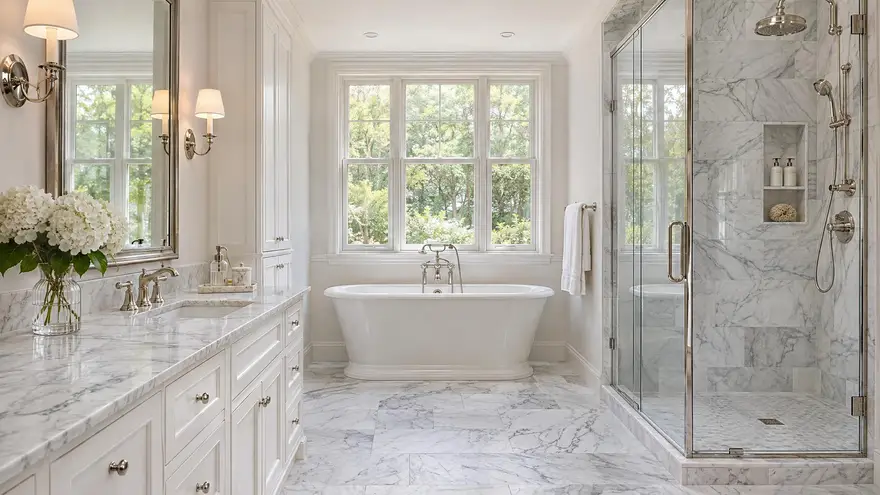
Marble is the classic for bathrooms; honed finishes hide etching and are less slippery than polished. Travertine and limestone bring warmth and suit floors and showers when sealed. Slate is naturally textured and good for entries.
Kitchens are harder on stone because acids such as lemon juice and vinegar etch marble and limestone. Many clients use stone in the bathroom and a stone-look porcelain in the kitchen.
Living With Stone
Sealed stone resists stains and should be resealed periodically, more often in showers. Clean it with a pH-neutral cleaner rather than vinegar or bathroom sprays. If you want the look with none of the upkeep, a marble-look porcelain slab is worth considering.
Need something else? See all of our floor tile installation services, or learn more about your local tile contractor in Arlington, VA.