Grout is porous and tile is not a seal. In every shower, water gets through the joints and reaches whatever is behind them. Waterproofing is what stops it there and sends it to the drain.
Many showers we tear out in Northern Virginia were built with tile directly over drywall or bare cement board, with plastic sheeting stapled behind at best. They leaked slowly for years. We build showers so that does not happen.
How We Waterproof a Shower
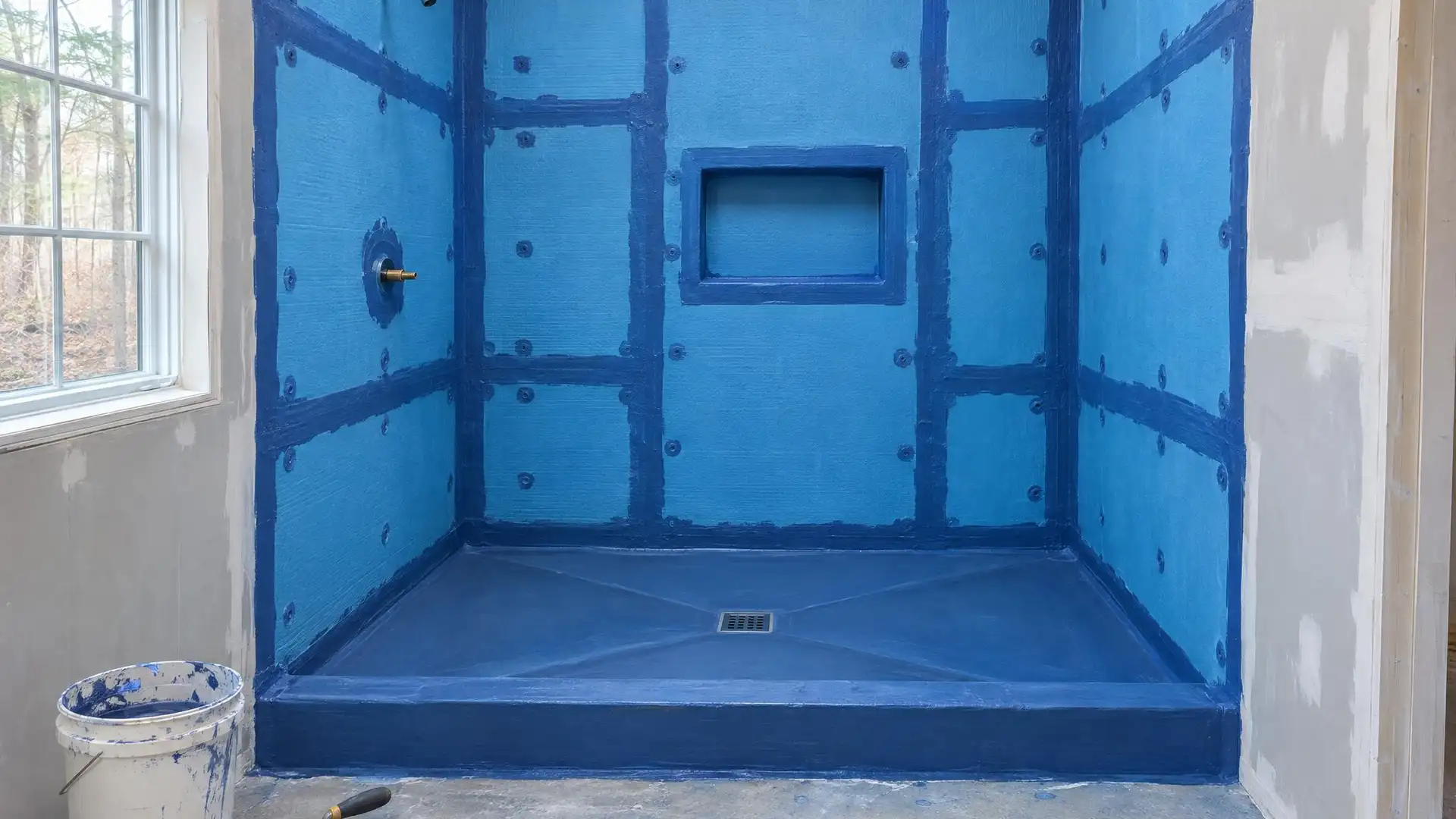
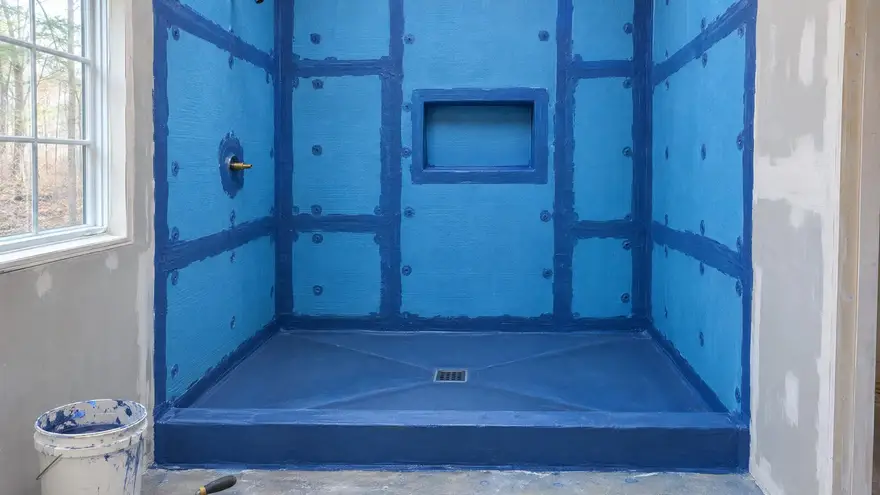
We use bonded waterproofing systems, applied to the face of the wall and pan directly beneath the tile. Depending on the shower that is a sheet membrane, a liquid-applied membrane or waterproof foam board with sealed seams. Each has its place, and we choose based on the layout and the tile going over it.
- Membrane on every wall, the pan and the curb, with no gaps
- Pre-formed or reinforced inside and outside corners
- A drain that bonds to the membrane so the pan and drain act as one piece
- Sealed collars at the valve, shower arm and body sprays
- Niches, benches and window returns fully wrapped, with sloped horizontal surfaces
The Flood Test
Before tile, we plug the drain and fill the pan to just below the curb, mark the level and leave it. If the mark has not moved when we return, the pan is watertight. It is a simple step that takes a day, and it is the only way to know for certain before the pan is buried under tile.
Where Waterproofing Matters Beyond the Shower
We also waterproof tub surrounds, steam showers, bathroom floors in curbless layouts and laundry room floors. If you are tiling a room where a leak would damage a finished ceiling below, ask us about protecting the whole floor.
Need something else? See all of our bathroom tile installation services, or learn more about your local tile contractor in Arlington, VA.